

Zawód psychoterapeuty jest zawodem paradoksalnym. Uczymy pacjentów rozpoznawania własnych granic, dbania o siebie, wychodzenia z wypalenia i robimy to niekiedy w stanie, który sami powinniśmy nazywać po imieniu: wyczerpania emocjonalnego, cynizmu i poczucia, że to, co robimy, przestało mieć sens.
Which qualities really set you up for success in business?

If we were to identify one thing that the vast majority of business guides have in common, it would be this: a list of the qualities of the ‘ideal entrepreneur’. Determination, passion, resilience, creativity, vision. Sound familiar?
On the causes and consequences of patients discontinuing psychotherapy prematurely

Psychotherapy is one of the most scientifically well-documented methods of treating mental disorders. And yet, a significant proportion of people who start it never finish it, at least not in a planned and therapeutically justified manner. The phenomenon of premature termination of therapy is so common in clinical practice that it warrants serious reflection. Both on the part of therapists and the patients themselves.
Why is ‘let’s stay together for the sake of the children’ sometimes the biggest mistake?

When a couple with children tells me in my consulting room that they are ‘staying together for the sake of the children’, I feel a familiar sense of unease. Not because I think they should split up immediately. Rather, because behind that statement lies one of the most deeply ingrained social beliefs, which scientific research has been systematically challenging for years. The belief that staying in a relationship (any relationship) is better for the children …
Money and relationships. How shared finances affect relationships and levels of trust

Money has always fascinated psychologists. Not because it is an end in itself, but because it acts as a mirror, reflecting our fears, values, self-esteem and the way we relate to others.
10 key psychological manipulation techniques in cults
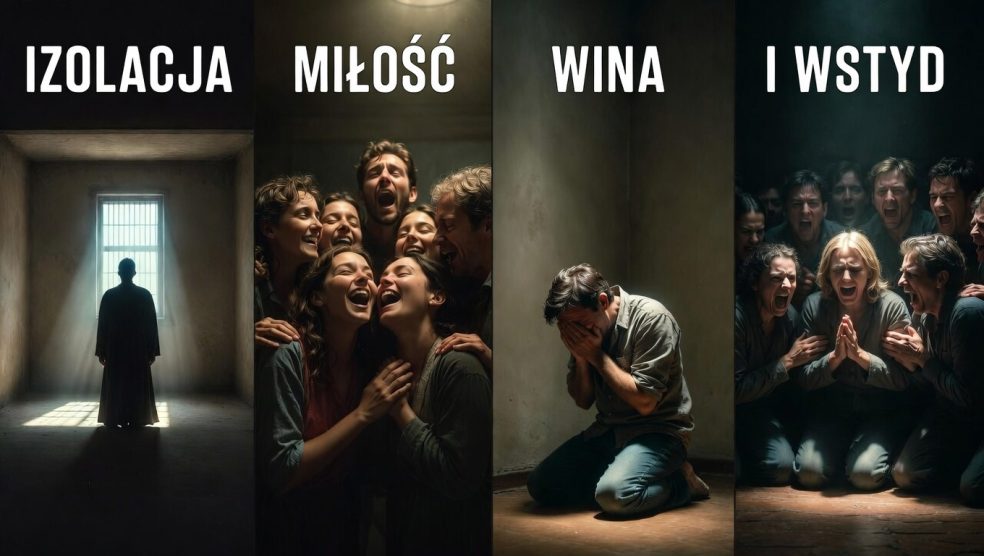
Mam w gabinecie zasadę: nie oceniać. Ale kiedy siada przede mną osoba, która przez lata oddawała grupie wszystkie pieniądze, zrywała kontakty z rodziną i wierzyła, że jej lider ma bezpośredni kontakt z Bogiem, coś we mnie wyraźnie się buntuje. Nie dlatego, że taka osoba jest głupia. Wręcz przeciwnie.
Why do we feel guilty spending money on ourselves?

Imagine you're sitting in a coffee shop and order a more expensive cappuccino instead of a regular coffee. Or you pop into a shop for one item and leave with a bag of shopping you „didn't actually need”. After the momentary pleasure, something unpleasant follows – a slight but nagging sense of guilt. Where does this feeling come from? Why is spending money on ourselves so often accompanied by moral discomfort, as if we...
Culinary Preferences: Where Ancient Instincts Meet the Modern World

We stand before a fridge full of food, and yet we reach for crisps. We know we should pick an apple, but our hand drifts towards chocolate. This isn't a matter of weak willpower; it's an echo of our evolutionary past that rings particularly loudly in a world that has changed faster than our brains could keep up.
New technologies in forensic psychology: from data analysis to artificial intelligence

We're sitting opposite each other. The patient tells me their story, and I listen, observe, picking up on nuances in their facial expressions, tone of voice, and choice of words. They are a human being, and as a psychologist, I try to understand them and sometimes predict their behaviour. Now, let's imagine an algorithm sitting opposite us. It has no eyes, it doesn't feel, but it „sees” patterns in the data that I might overlook. …
Why am I still waiting for a „better moment” instead of taking action?

Waiting for the „perfect moment” is something that probably everyone knows. We plan, we dream, we set goals, but when it comes to taking action, we suddenly find a thousand reasons to put it off. „I'll do it when I'm more prepared,” „I'll wait until I'm in a better mood,” „Now isn't a good time” – sound familiar?